
As we age, oxidative stress can contribute to cognitive decline, skin aging, and vision deterioration. Clinical studies suggest that natural astaxanthin, a powerful antioxidant, may help support healthy aging by protecting cells from oxidative damage.
Research has repeatedly demonstrated that antioxidants help support the body’s defenses, and counteract the damaging effects of reactive oxygen species (ROS). As people age, the body’s antioxidant defense system becomes weaker, and more susceptible to certain health conditions that are associated with oxidative stress. However, many individuals do not get adequate levels of antioxidants through diet alone. Consequently, antioxidant supplementation is often required.
Some recent human clinical studies demonstrate that natural astaxanthin is one of the most powerful antioxidants for supporting a number of health issues, including: improving cognitive function in healthy seniors; delaying aging through reduced oxidative damage of blood lipids and the skin; and delaying age-related vision degeneration.
Beginning at any age, dietary supplementation with astaxanthin can help combat oxidative stress, and promote better health and wellbeing throughout life.
The Role of Oxidative Damage in Aging
From a biological point of view, aging involves the accumulation of oxidative damage in cells and tissues. Younger people are naturally better protected from free radicals and other reactive oxygen species (ROS) through balanced activity of the mitochondria, efficient antioxidant and DNA repair systems, and active protein degradation machinery. Aging, on the other hand, is generally accompanied by mitochondrial dysfunction leading to increased free radical production that, in turn, leads to an overloading of the defense systems and oxidative damage of cellular components [1].
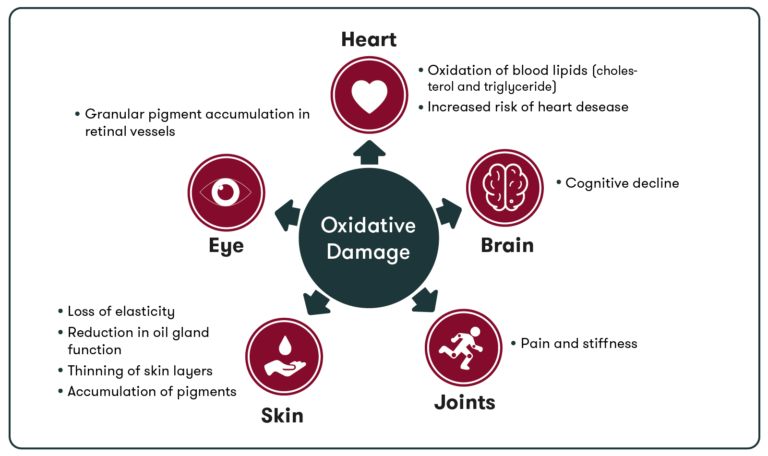
Oxidative stress and an imbalance of pro-oxidants and antioxidants, can impact several health issues (see Figure 1).
Several decades of dietary research findings [2,3,4] suggest that consuming greater amounts of antioxidant-rich foods can help support a healthy lifestyle throughout the lifespan. Antioxidants help to counteract the damaging effects of ROS, and promote a healthy oxidative balance.
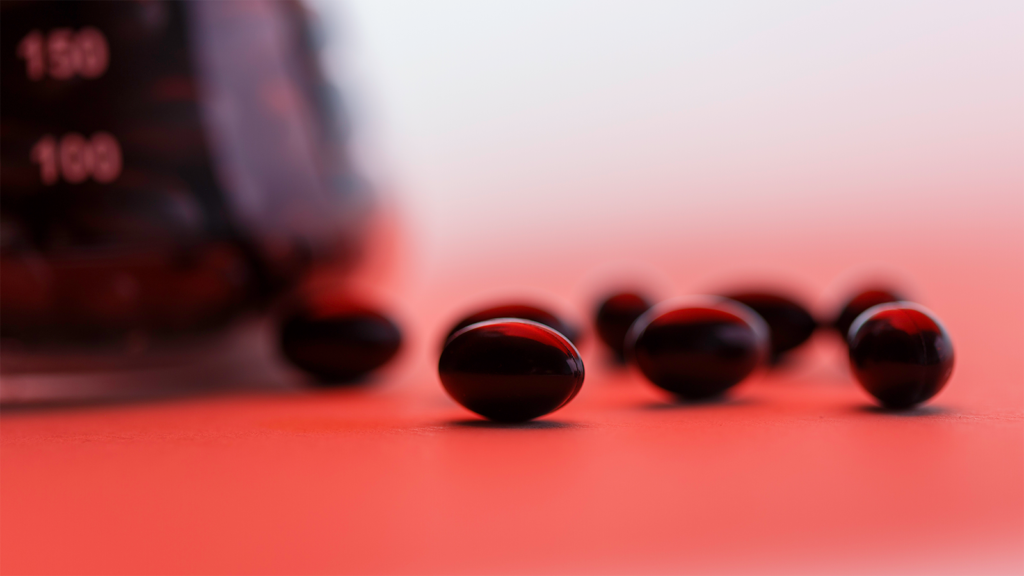
Although dietary intake is a very important source of antioxidants, many seniors don’t get sufficient amounts of antioxidants through diet alone. This is primarily due to the decreased intake of antioxidant-rich food, along with less efficient nutrient absorption, and diminished retention. Consequently, antioxidant supplementation can help balance ROS and reduce oxidative stress, helping seniors to live healthier lives.
The World's Population is Aging
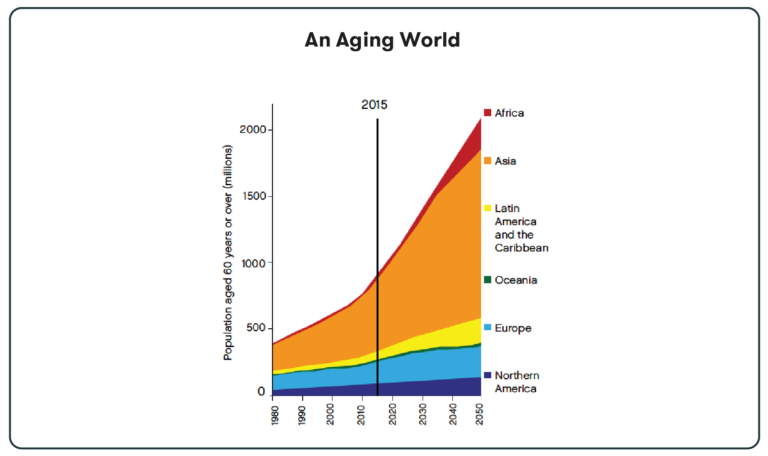
Nearly all countries around the world are experiencing significant growth in the number of seniors in the population, and this growth is projected to accelerate in the next decades (Figure 2). According to the United Nations, one in eight people worldwide was age 60 years or over in 2015. By 2030, older individuals are projected to account for one in six people globally. By 2050, one in every five people will be aged 60 years or over [5].
The normal aging process is accompanied by numerous health challenges, which vary between people due to nutrition, genetics, lifestyle, environment, and life events. In order to minimize rising healthcare costs, and help to ensure that the aging population remains as healthy and active as possible, there is a responsibility within the natural products industry to support these individuals, and help everyone age with better health and more comfort.
Supporting Healthy Aging with Astaxanthin
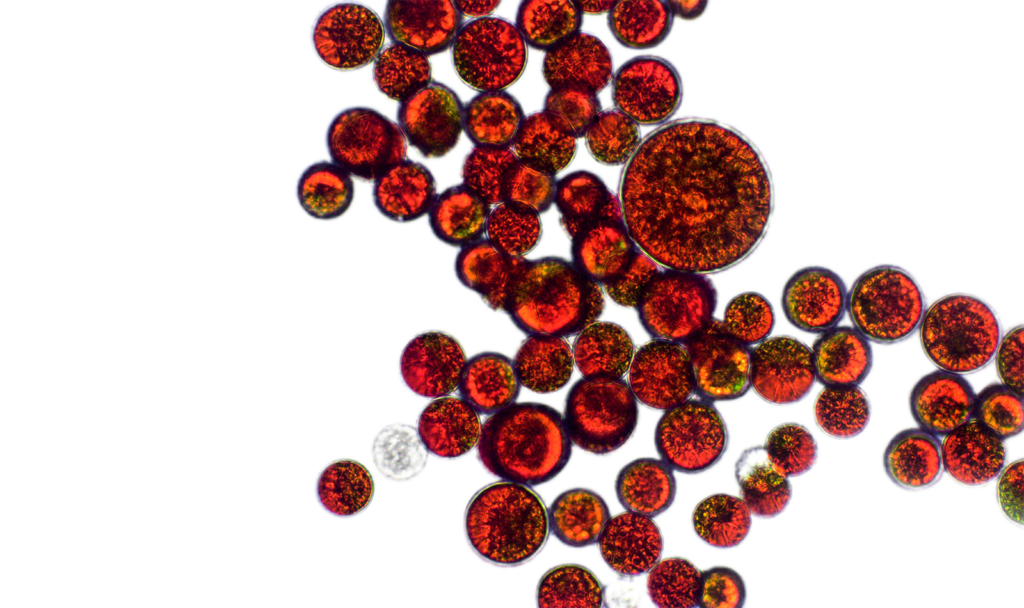
A powerful antioxidant that is attracting a lot of interest in the “healthy aging” category is natural astaxanthin. It belongs to a family of naturally-occurring organic pigments called carotenoids. Natural astaxanthin is the main carotenoid found in certain aquatic animals. A naturally cultivated form is produced from the microalgae Haematococcus pluvialis, and is one of the most powerful natural antioxidants known. It has numerous health benefits that are supported by extensive scientific research, including 94 human clinical trials and more than 1400 peer-reviewed papers [6].
Comparison studies have shown that astaxanthin is 6,000 times more powerful than vitamin C, 100 times more powerful than vitamin E, and five times more powerful than ß-carotene in trapping energy from singlet oxygen, one of the most common ROS in the body [7]. Astaxanthin also has the ability to trap several types of ROS/free radicals. In addition, the way astaxanthin neutralizes harmful ROS/free radicals is more gentle on the body’s cells compared to other antioxidants that can actually be harmful because they may turn into highly reactive molecules themselves [8]. Natural astaxanthin can help address some age-related challenges, and it has been shown to combat oxidative stress by removing ROS and promoting a healthy oxidative balance.
The following are some of the health benefits of natural astaxanthin that have been demonstrated by human clinical studies:
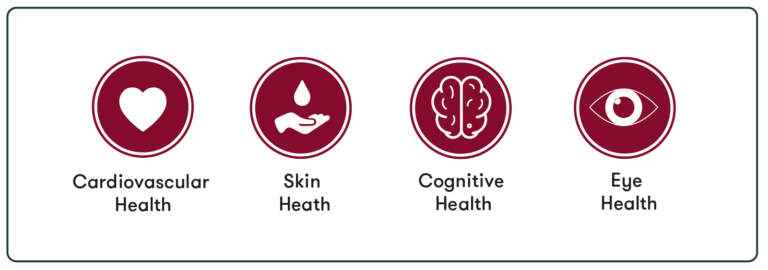
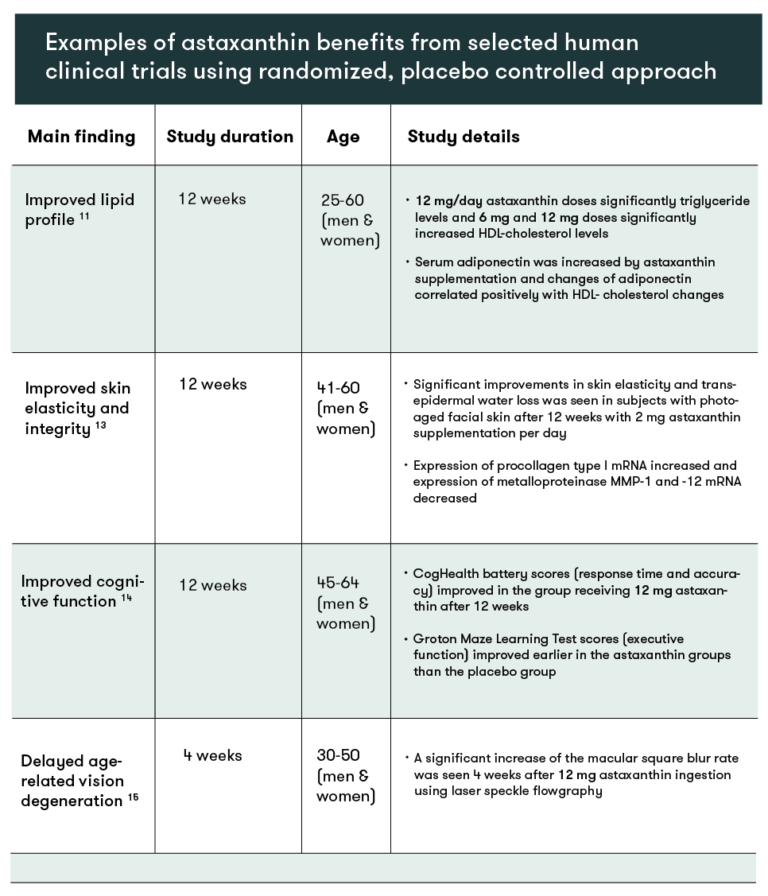
- Astaxanthin supports cardiovascular health by improving blood lipid profiles in healthy seniors. It has a protective effect against cholesterol and triglyceride oxidation [9, 10, 11]
- Astaxanthin supports normal healthy skin by improving skin elasticity and moisture, reducing hyper-pigmentation and wrinkle formation [12, 13]
- Astaxanthin improves cognitive function in the healthy seniors [14]
- Astaxanthin protects the eye by reducing oxidative damage within the eye and improving blood flow in capillaries in the eye [15, 16, 17]
Conclusion
As we age, our bodies and minds change. There’s no getting around this. Healthy aging is not about turning back the clock, or denying the realities of age. It is about optimizing opportunities for health and wellbeing in older age, so seniors can do the things they value for as long as possible.
Health and wellbeing in older age are shaped by events, lifestyle choices and environmental factors throughout life [18]. For instance, cardiovascular disease, high blood pressure, and diabetes typically occur in individuals with an unhealthy diet and/or sedentary lifestyle beginning early in life. Therefore, concerns regarding healthy aging must be addressed throughout life, and it is never too late to start supplementing with a powerful antioxidant like astaxanthin.In fact, many Millennials are already concerned about preventing health problems later in life, and are taking steps to preserve their youthful vitality [19].
References
- ShigenagaMK, Hagen TM, Ames BN, Proc Natl Acad Sci USA, 1994, 91:10771-8.
- Kandola K, Bowman A, Birch-Machin MA, Int JCosmet 2015, 37 Suppl 2:1-8.
- Valko et al, TheInternational Journal of Biochemistry & Cell Biology. 2007, 39(1):44-84.
- Fusco D,Colloca G, Monaco MRL, Cesari M. Interventions in Aging. 2007, 2(3), 377-87.
- 5.United Nations, World Population Prospects: The 2015 Revision, 2015, available at: https://esa.un.org/unpd/wpp/Publications/Files/Key_Findings_WPP_2015.pdf
- Search performed on 2016-11-17.
- Nishida, Yamashita, Miki. Carotenoid Science, 2007, 11, 16-20.
- Beutner et al, Journal of the Science of Food and Agriculture, 2001, 81(6),559-568.
- Nakagawa et al, Br J Nutr, 2011, 105:1563-71.
- Kim YK,Chyun JH, Nutritional Sciences, 2004, 7:41-46.
- Yoshida et al, Atherosclerosis, 2010, 209(2): 520-523.
- Tominaga et al, ActaBiochim Pol, 2012, 59:43-7.
- Yoon et al, J Med Food, 2014, 17(7): 810-816.
- Katagiri et al, Journal of Clinical Biochemistry and Nutrition, 2012, 51(2): 102-107.
- Saito et al,Graefes Arch Clin Exp Ophthalmol, 2012, 250:239-45.
- Hashimoto et al, J ClinBiochem Nutr. 2013, 53:1-7.
- Hashimoto et al, JClin Biochem Nutr. 2016, 59:10-5.
- Wassel, NC Medical Journal: Healthy Aging, 2008, (69:5), available at: https://libres.uncg.edu/ir/uncg/f/J_Wassel_Healthy_2008.pdf
- Council for Responsible Nutrition, 2015 CRN Consumer Survey on Dietary Supplements, 2015, available athttp://www.crnusa.org/CRNconsumersurvey/2015/index.html#habits
Learn more about Natural Astaxanthin from Algalíf: