
Maintaining our ability to think, learn, and remember as we age is critical for a high quality of life. However, many people experience a decline in cognitive function over time.
Oxidative stress, a damaging condition caused by the overproduction of reactive oxygen species (ROS), has been linked to several neurological diseases. Antioxidants are natural substances that help to prevent the harmful effects of excessive ROS activity, and combat or delay cell damage.
Natural astaxanthin is a powerful antioxidant and highly effective at counteracting ROS. Recent studies have demonstrated that astaxanthin can support health cognitive function in later life, enabling individuals to stay sharp and do the things they value for as long as possible.
How Oxidative Stress Affects the Brain
There is growing recognition that reactive oxygen species (ROS) and free radicals play a role in many neurological diseases. [1] These unstable molecules can damage cells and tissues by oxidation. Each cell in the human body can form 20 trillion ROS per day through normal metabolism and be attacked by these reactive molecules 10,000 times per day. [2]
The brain is particularly vulnerable to oxidative damage due to several physiological, anatomical, and functional factors such as higher oxygen availability, modest antioxidant defenses, limited regenerative capacity, and multiple neurological cell types. [1]
In a healthy human body, the antioxidant defense system keeps the generation of ROS and free radicals under control. However, these defenses grow weaker as people age, making them more susceptible to health conditions associated with oxidative stress. Therefore, supplementation with dietary antioxidants can help support the body’s defenses and mitigate the harmful effects of ROS.
What is Astaxanthin?
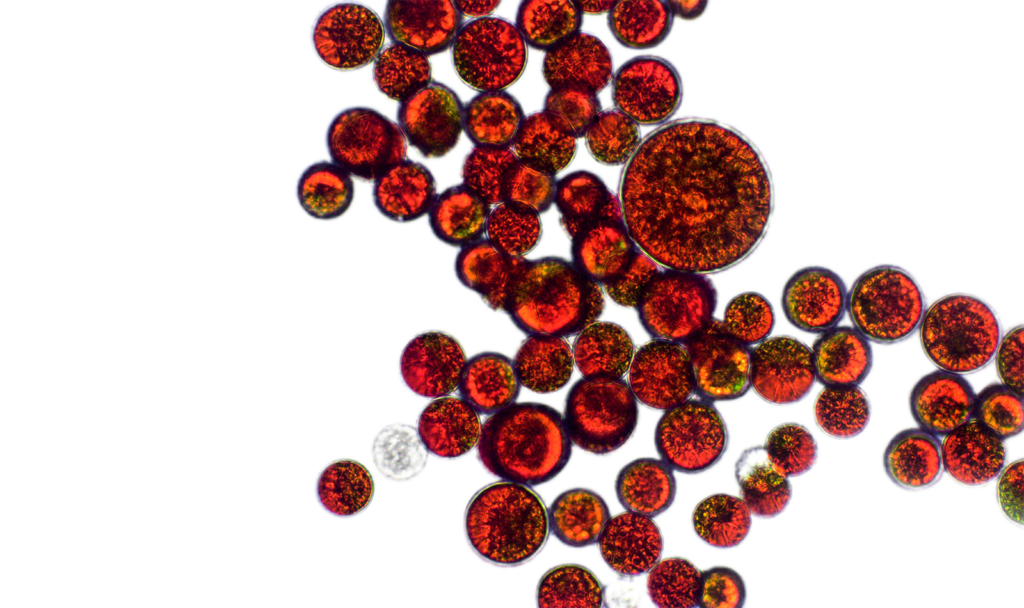
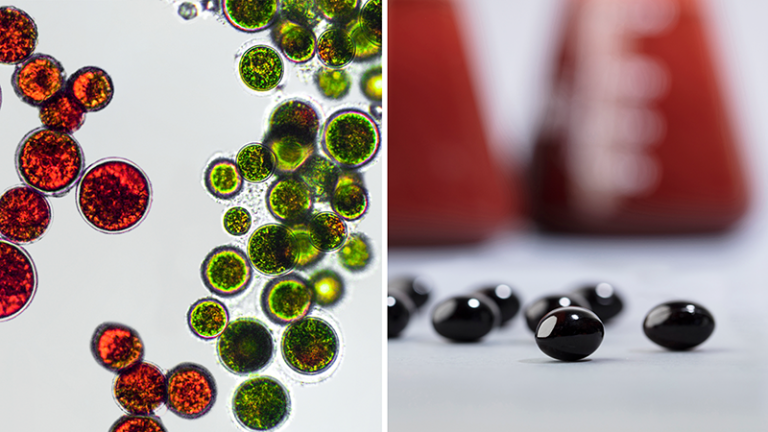
Astaxanthin is a natural antioxidant that is attracting great interest in the cognitive health category. Sourced from the microalgae Haematococcus pluvialis, astaxanthin is one of the most powerful natural antioxidants known. It has numerous health benefits that are supported by extensive scientific research, including over 50 human studies and 1400 peer-reviewed papers. [3]
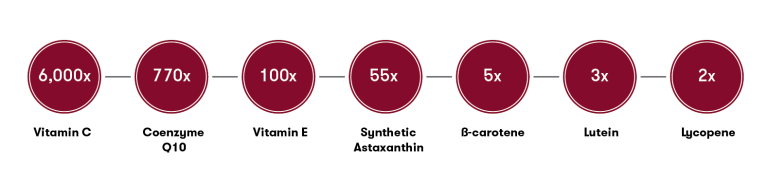
A comparative study (see image below) has shown that natural astaxanthin is 6,000 times more powerful than vitamin C, 100 times more powerful than vitamin E, and five times more powerful than ß-carotene in trapping energy from singlet oxygen, one of the most common ROS in the body. [4] In addition, astaxanthin can neutralize harmful ROS without generating pro-oxidants, which is a common side effect of other antioxidants. [5]
Benefits of Astaxanthin for Brain Health
- Improved erythrocyte antioxidant status and decreased PLOOH levels, which may contribute to the prevention of dementia. [7]
- Improved cognitive function in healthy, aged individuals. [8]
- Improved higher brain function, including cognition, attention, memory, information processing and resultant behavior in older persons. [9]
- Potential for counteracting cognitive impairment in subjects with mild cognitive impairment. [10]
Substation studies focused on astaxanthin benefits for cocnitive health:
There is a growing body of peer-reviewed research focusing on the general health benefits of astaxanthin supplementation, including the effects on cognitive function and brain health. Below is a summary of key findings from recent human studies (see also Figure 2).
Nakagawa et al. conducted a randomized, doubleblind, placebo-controlled human trial to test for the effects of astaxanthin supplementation on phospholipid hydroperoxide (PLOOH). [7] PLOOH accumulates abnormally in the erythrocytes of dementia patients, and astaxanthin is hypothesized to prevent the accumulation. After 12 weeks of treatment with 6 mg/d or 12 mg/d of astaxanthin, erythrocyte and plasma PLOOH concentrations were lower in the astaxanthin groups than in the placebo group. The authors concluded that astaxanthin supplementation resulted in improved erythrocyte antioxidant status and decreased PLOOH levels, which may contribute to the prevention of dementia.
In another randomized, double-blind, placebo-controlled human trial, Katagiri et al. studied the effects of astaxanthin supplementation on cognitive function. [8] Ninety-six, healthy, middle-aged and elderly subjects with some level of age-related forgetfulness were included in the study and received either astaxanthin (6 mg/d or 12 mg/d) or a placebo over the course of 12 weeks. Changes in cognitive performance were assessed using two standardized memory tests. The CogHealth test is a computer-based test of memory and thinking capacity, and the Groton Maze Learning Test (GMLT) measures executive function using a maze learning paradigm. CogHealth scores improved in the 12 mg/d group compared to other treatments, and GMLT scores improved earlier in the 6 mg/d and 12 mg/d group than the placebo group. Together, these results indicate that astaxanthin supplementation improves cognitive function in healthy, aged individuals.
Satoh et al. conducted an open-label trial with ten male subjects aged 50-69 that presented symptoms of mild cognitive impairment. [9] The study lasted for 12 weeks and tested an astaxanthin dose size of 12 mg/d. Cognitive health parameters (CogHealth and P300) were assessed before administration, after 6 weeks, and finally after 12 weeks. The CogHealth test battery comprises seven tasks that assess a range of cognitive functions such as signal detection, working memory, simple learning, and associative learning. The P300 refers to the event-related potential component elicited in the process of decision making, which is a parameter used as a measure of the efficacy of various treatments on cognitive function. The authors concluded that administration of astaxanthin might improve higher brain function, including cognition, attention, memory, information processing and resultant behavior in older persons.
Zanotta et al. performed an exploratory study to assess the effects of a particular dietary supplement on subjects with mild cognitive impairment (MCI). [10] The supplement in question contained 2 mg of astaxanthin, extracts of Bacopa monnieri, phosphatidylserine and vitamin E. One hundred and two men and women aged 71.2 + 9.9 years were enrolled in the study that lasted 60 days. Subjects had been diagnosed with MCI based on results of a mini-mental state examination (MMSE), where the mean score was 26.0 + 2.0 and all scores were between 22 and 28 (total scale goes from 0 to 30). They underwent the Alzheimer’s Disease Assessment Scale-cognitive subscale (ADAS-cog) test and the clock-drawing test at the baseline and upon completion of the trial. The results showed that total ADAS-cog scores improved from 13.7 + 5.8 at the baseline to 9.7 + 4.9 on day 60, and the clock-drawing test scores improved from 8.5 + 2.3 to 9.1 + 1.9. The authors, therefore, concluded that dietary supplementation with the tested compound showed potential for counteracting cognitive impairment in subjects with mild cognitive impairment
In addition to these human clinical trials, several other studies have shown evidence for the beneficial effects of astaxanthin supplementation. [11] For example, Chang et al. hypothesized that astaxanthin could be used as a neuron protectant and in early-stage Alzheimer’s disease therapy, [12] and Lobos et al. found that astaxanthin protects neurons from noxious effects of amyloid-peptide oligomers on mitochondrial ROS production. [13]
Together, these and other recent scientific findings demonstrate that natural astaxanthin, as an extremely potent scavenger of ROS, can help support cognitive function in later life. Moreover, the interest in astaxanthin as an ingredient in the healthy category is growing and will continue to grow as the relative ratio of older consumers increases. In the US, for instance, 24% of men and30% of the women 85 or older have moderate to severe memory impairment, and the population in this age group is expected to grow from 6 million in 2014 to 20 million by 2060. [14] This development creates an opportunity for manufacturers to develop dietary supplements that can help people live longer and more active lives.
References
1. Patel, M., Trends in Pharmacological Sciences, 2016. 37, 768-778
2. Niyogi, K.K., O. Bjorkman and A.R. Grossman, Proc.Natl. Acad.Sci.U.S.A, 1997. 94, 14162-14167.
3. PubMed. Search performed on 2016-11-17.
4. Nishida, Yamashita, Miki. Carotenoid Science, 2007, 11, 16-20.
5. Beutner et al, Journal of the Science of Food and Agriculture, 2001, 81(6),559-568.[6]
PubMed. Search performed on 2016-11-17.
6. Tso, Mark O. M., Lam, Tim-Tak, Patent No. 5,527,533. 1996. Washington, D.C., U.S. Patent. Available at: https://www.google.com/patents/US5527533
7. Nakagawa, K. et al. British journal of nutrition. 2011, 105, 1563-1571.
8. Katagiri, M. et al. J. Clin. Biochem Nutr. 2012, 51, 102-107.
9. Satoh, A. et al. J. Clin. Biochem Nutr. 2009, 44, 280-284.
10. Zanotta, D. et al. Neuropsychiatric disease and treatment. 2014, 10, 225-230
11. Grimmig, B. et al. GeroScience. 2017, 39, 19-32.
12. Chang, C. et al. Journal of medicinal food. 2010, 13, 548-556
13. Lobos, P. Neural plasticity. 2016, 1-13
14. Federal Interagency Forum on Aging-Related Statistics. Older Americans 2016: Key Indicators of Well-Being, 2000.