The astaxanthin molecule has some unique properties that lead to strong antioxidant and anti-inflammatory effects. As a result, astaxanthin has a wide range of health benefits for the human body.
The broad range of health benefits astaxanthin provides as a neutraceutical for human is well known. Among these reported health benefits are protection of skin against UV irradiation, faster muscle recovery after exercise and promotion of joint and cardiovascular system health. But what properties of the astaxanthin molecule make it so unique? Why does the compound have such a positive effect on so many different systems of our bodies?
A Unique Carotenoid with Powerful Antioxidant Capabilities
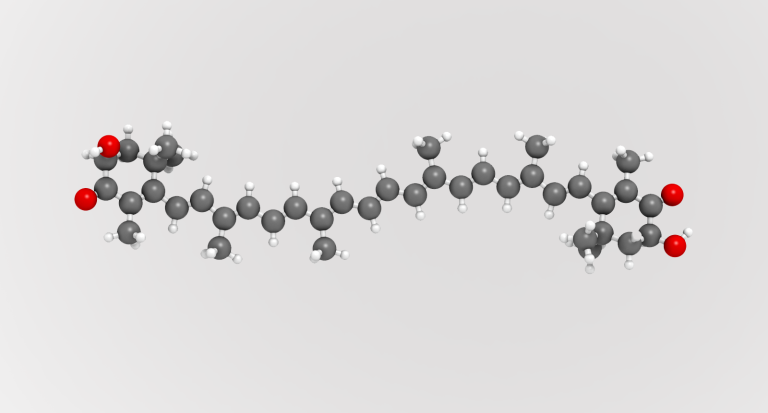
Astaxanthin is a carotenoid compound with deep red coloring properties. The broad positive effect of astaxanthin on the human body is due to its unique molecular structure and amphipathic nature. Astaxanthin has a long chain of alternating double and single bonds that allows the molecule to delocalize unpaired electrons from free radicals and thereby stabilizing them. In other words, it can absorb and neutralize reactive oxygen species (ROD) without becoming unstable itself. Unlike some other antioxidants like beta-carotene or vitamin C at high concentrations, astaxanthin does not switch to pro-oxidant behavior under oxidative stress. This resistance to becoming pro-oxidant makes astaxanthin more consistently protective.
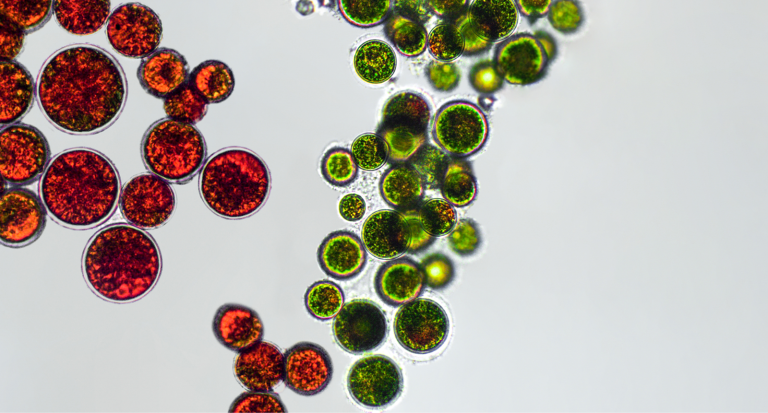
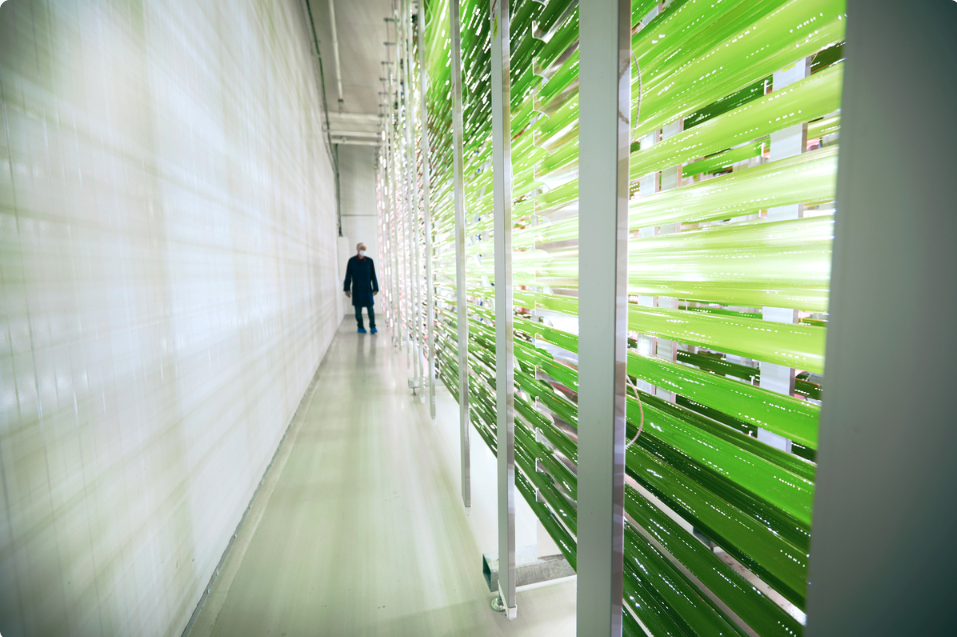
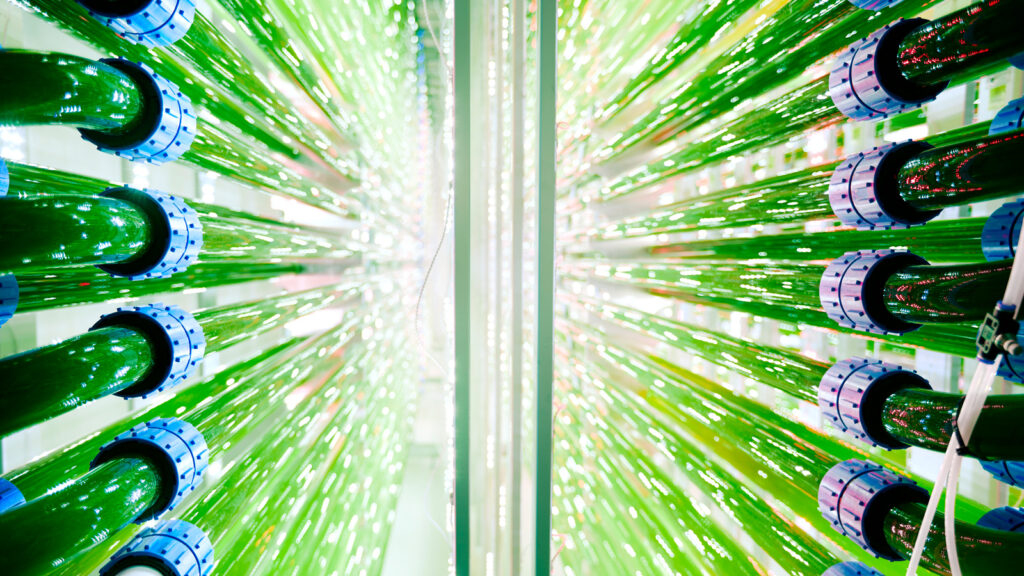
Haematococcus pluvialis, a natural source of astaxanthin, accumulates this potent antioxidant under stress conditions
Amphipathic Nature: The Key to Cellular Protection
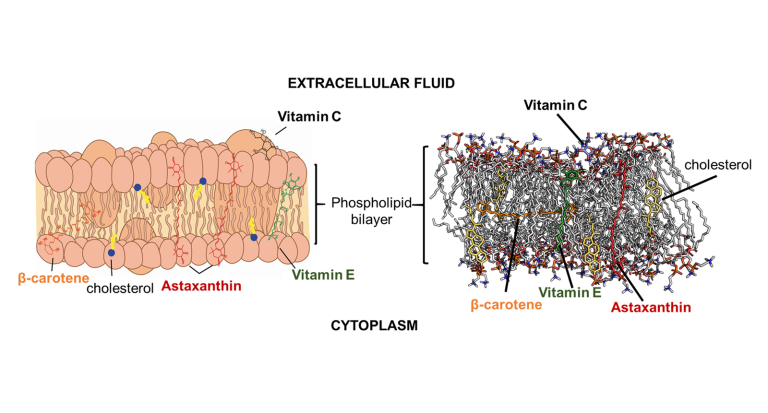
Another vital feature of the astaxanthin molecule are the polar groups (hydroxyl and keto groups) at each end of the molecule. This gives the molecule the amphipathic nature; the largest part of the compound is lipid-soluble, but the polar groups make each end of the molecule water-soluble. The reason why this is an important feature is that this makes astaxanthin have similar solubility properties to phospholipids, which are the main components of cell membranes.As a result, astaxanthin molecules are capable of spanning the lipid bilayer of cell membranes, positioning the polar ends at the inner and outer surfaces of the cell membrane, and the non-polar middle chain within the membrane core. This orientation lets astaxanthin intercept reactive oxygen species (ROS) both inside and outside the membrane, protecting lipids from peroxidation.
Cell membrane Astaxanthin. Schematic (left) and tridimensional (right) view of the astaxanthin molecule and other common antioxidants located within the cell membrane. Adapted from Palozza et al., 2021. Archives of Biochemistry and Biophysics, 698, 108735.
Anti-Inflammatory Mechanisms: Direct and Indirect
The anti-inflammatory properties of astaxanthin are both direct and indirect. Studies have shown that astaxanthin can directly downregulate COX-2 and iNOS expression, which reduces the production of prostaglandin and nitric oxide – two major inflammatory mediators. It also modulates Nrf2, a transcription factor that upregulates the cell’s own antioxidant enzymes. The indirect anti-inflammatory effects are mostly a result of reduced oxidative stress. Reactive oxygen species (ROS) activate pro-inflammatory transcription factors, and by scavenging them, astaxanthin reduces inflammatory gene expression. Also, because astaxanthin embeds itself in cell membranes, it helps maintaining membrane integrity and prevents lipid peroxidation, which otherwise would trigger inflammation.
A Molecule with Broad Systemic Benefits
Reactive oxygen species (ROS) and inflammation are known to have negative effects on a large variety of systems in the human body – and this is why the antioxidant and anti-inflammatory properties of astaxanthin are capable of having such diverse positive effects.
The astaxanthin molecule.
Facebook
LinkedIn
An Algalif Article by Jan Eric Jessen, M.Sc., Head of R&D.
Algalíf’s sales team will be attending SupplySide Global, taking place at Mandalay Bay in Las Vegas on October 28–30, 2026. SupplySide Global is one of the
Algalíf has won Marketing Initiative of the Year at the NutraIngredients-Asia Awards 2026 for the Astalíf™ Brand Transformation Initiative, earning one of the most prestigious recognitions
We are proud to have been selected as one of two finalists for Marketing Initiative of the Year, recognised for our Astalíf™ Brand Transformation Initiative. The
Sustainably Natural Astaxanthin from Iceland – Pure, Consistent, and Trusted by Leading Brands. This September, Algalíf brings its natural astaxanthin and other health-promoting ingredients to Bangkok,
At Algalíf, reliability is built in, through clear processes, smart planning, and a team that knows how to deliver natural, sustainable astaxanthin from Iceland to partners
On June 17, Iceland celebrates its National Day, honoring Iceland’s independence, identity, and enduring spirit. At Algalíf, this day is an opportunity to reflect on the
At Vitafoods Europe 2026, Algalif’s commitment to sustainability was recognised as our exhibition stand received Gold Certification in the Better Stands Programme. Achieving Gold Certification means
World Environment Day highlights the global need for climate action and sustainable development. At Algalíf, we mark the day by reflecting on how innovation and biotechnology
Adding natural astaxanthin to your daily routine supports the skin’s natural resilience and contributes to effective sun protection during sunlight exposure. While sunlight is essential for
Science‑driven innovation shaping sustainable solutions for health, nutrition, and long‑term impact. World Creativity and Innovation Day is a reminder that creativity and innovation are essential drivers
Algalif Iceland, a global leader in sustainable microalgae cultivation and natural astaxanthin production, announces the launch of Astalíf™ 20. A standardized 20% natural astaxanthin oleoresin developed
Algalíf will be exhibiting at Vitafoods Europe 2026 in Barcelona, 5–7 May – Booth 3C170, showcasing sustainable natural astaxanthin and other health-promoting ingredients. Algalíf, a leading
Today, on Global Recycling Day, we highlight the importance of responsible production, circular thinking, and sustainable innovation. At Algalíf, sustainability is the foundation of everything we
Our women are at the heart of many of Algalíf’s achievements, and on International Women’s Day we proudly recognize how they help drive forward our mission
In today’s fast paced and constantly evolving workplace, success isn’t just defined by technical skills or individual brilliance. The true foundation of a thriving organization lies
Natural astaxanthin, a powerful antioxidant from Haematococcus pluvialis microalgae, is emerging as a key ingredient for women’s health. What is natural astaxanthin and why does it
A creative exploration of the unique challenges faced by SOP authors, and suggested methods to improve SOP clarity and effectiveness to support quality in manufacturing. A
Algalíf has announced a leadership change following the decision of Orri Björnsson to step down as CEO after thirteen successful years with the company. Under Orri’s
Algalíf will showcase its Sustainable Natural Astaxanthin at SupplySide Global 2025 in Las Vegas, 27 – 30 October. Meet our team at Booth 7271 and discover